

Do we even know what leisure time is?
Taking time for yourself doesn’t have to be “worth it.”


I preordered Caroline Chambers’ newest cookbook, “What to Cook When You Don’t Feel Like Cooking: Make it Fast,” months ago, so when it showed up on my doorstep last week, it was a real Christmas-in-August moment. I love to read cookbooks to relax before bed and parked it on my pillow for when I finally had a second to myself after a nonstop day of juggling work, kids, doctor’s appointments and back-to-school activities.
That was 10 p.m. I flipped through it and saw that the index organizes the book’s recipes according to different categories of “What to cook when.” There was “You want to cook once and eat all week” and “You want to fill your freezer for future dinners” and — of course — “You’re in charge of the meal train.”
Because of course — of course! — the very person buying a cookbook to help them think through what to cook when they are already short on time is also in a season of life that encompasses so much caring for others.
This is a time with a lot of showing up, a lot of celebrating, a lot of making sure others are supported. In a single month you may be attending a baby shower, making sure someone who just lost a parent has dinner at home, and showing up for a friend who just received a difficult diagnosis. That’s on top of the needs of children of any age and aging parents.
So many women in midlife spend a lot of time — willfully! happily! graciously and gracefully! possibly under the pressure of societal expectations! — taking care of others. What this means is that they’re left with even less time for themselves to do … whatever the hell they want. (Even if that just means reading a cookbook in total silence from the comfort of your own bed.)
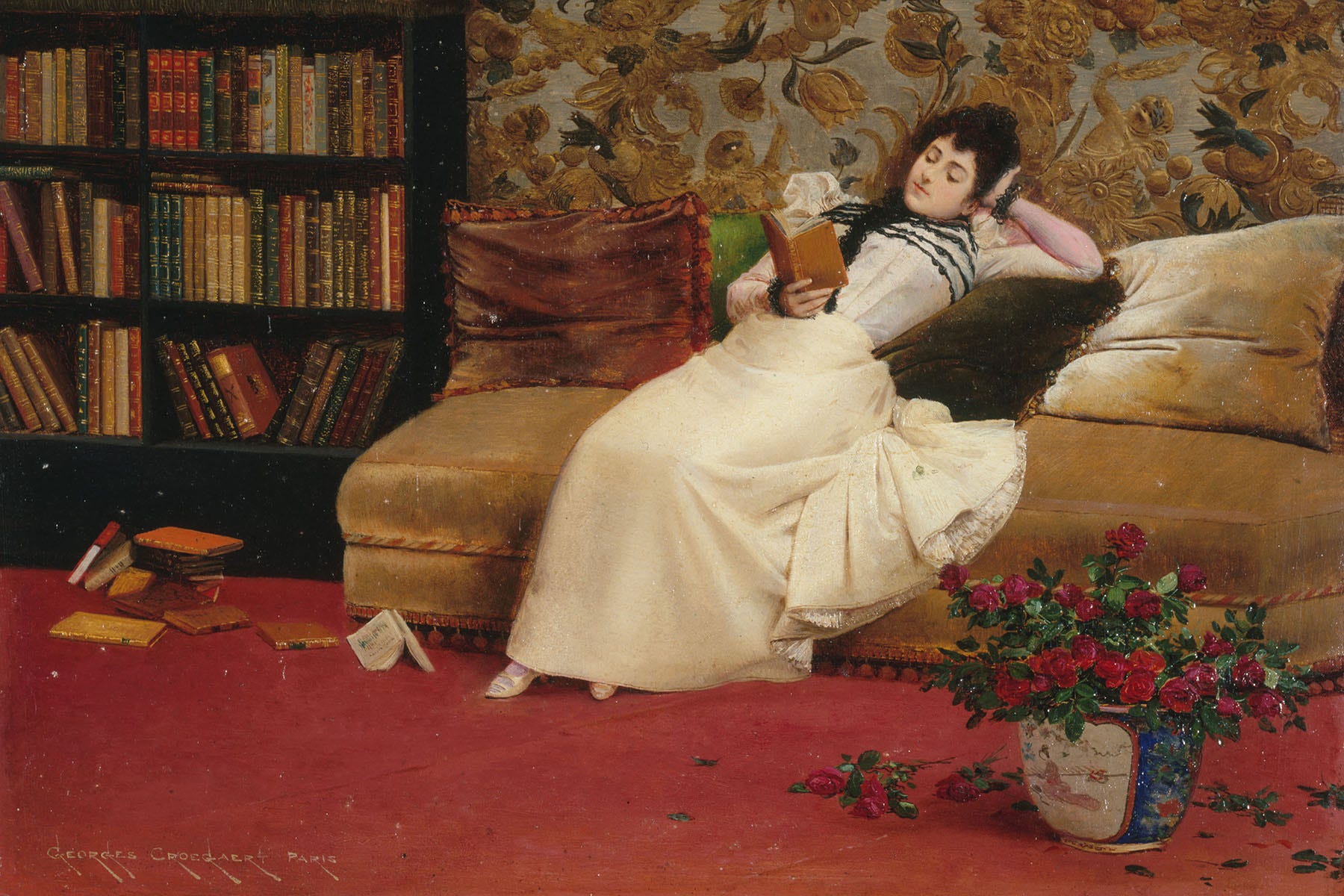
That’s why I called up my friend Brigid Schulte, a veteran journalist now serving as the director of the Better Life Lab at New America and an expert on time pressure, gender and the cost of being the person who does everything for everyone.
Cue the expert
Schulte is currently researching the very notion of “leisure time” and what this means through a gender lens. She told me that to even think about who gets access to it, you first have to define leisure.
“It’s something we sort of ridicule or belittle. We sort of talk about it like we don’t need it on the one hand because we’re so focused on being productive.”
The thing is, Schulte said, leisure time isn’t silly or frivolous. It’s really important — and really good for you. Not because it makes you more productive / faster / smarter, but because it just helps you be the most full and true version of yourself.
Especially for American women, she said, there’s this idea that leisure activities have to have a point — like going for a run because you’re training for a marathon, or studying a language because you think it might prove beneficial for your work. For women in midlife, there’s the added pressure that with so many responsibilities for other people, if we take time for ourselves in any way, it really, really has to be “worth it.”
But true leisure, Schulte told me, actually requires two things: one, that you freely choose an activity and two, that you control the time spent doing it.
Who gets to feel entitled to leisure time?
Schulte told me that research shows that women have historically had little access to these kinds of freely chosen activities in time controlled entirely by them.
Of course, further compounding this is the cultural expectation that “the best women put others first.” This dynamic is especially acute in midlife. It also yields real time inequities among women married to men.
It will also come as no surprise that Schulte said that men generally feel very deserving of this time. In 2023, the Pew Research Center found that working husbands spend two hours more a week than working wives on leisure time.
This gender gap is even larger among opposite-sex spouses who have children, with men netting 1.6 additional hours of leisure time than their wives while raising a child under the age of 18. When they have children under 4, men have almost three more hours a week of leisure time.
Similarly, research from The Gender Equity Policy Institute found that women spend twice as much time on caregiving and household work as men.
Same-sex couples have been found to divide household labor more equally, which also translates into more equitable access to leisure time in their partnerships. So yes, there does seem to be something about heterosexuality, and heterosexual-partnered parenting, that is especially bad for gender equity when it comes to time.
“I mean think about it — when you go golfing, when you go hunting, when you watch sports — you’re freely choosing those activities and they go on for a long period of time and you control the amount of time you spend doing it. There’s a sense of entitlement about that,” Schulte said.
For women, it’s a different story.
One study, Schulte said, found that globally, women had to feel like they had “earned” leisure time. That meant not just caring for others, but making preparations to be sure they’re cared for while the woman took time for herself.
“The problem is that it is an impossible standard to meet, because you’re never done,” Schulte said. “You’re never done with caregiving or caretaking.”
At what cost
Schulte said that when women do not take leisure time, there are not only real individual costs, but costs to our families, our communities and even society at large. This is especially acute for women in midlife — because they both have a lot of responsibility and a lot of valuable experience.
“The individual cost is when you don’t get that time to refresh your soul, you burn out,” she said.
It made me think back to something we talked about a few months ago, in our newsletter about how to know if you’re postpartum or in perimenopause. So much of what women in their 40s and beyond are experiencing isn’t just biological, but socio-cultural: This is a stressful time and one that comes with a lot of stigma and not a lot of built-in systems of support.
The leisure time gap underscores this reality — especially since not having this time for yourself does have real health consequences too: more stress, less sleep, a real strain on cardiovascular health, more inflammation.
Time inequity and who feels it the most
Of course, some people have even less access to the very idea of leisure time. Many of them are lower-earning women.
Schulte stressed that though the United States is one of the wealthiest countries in the world, we also have one of the largest low-wage workforces in the world. Women make up over 60 percent of Americans holding multiple hourly jobs to support themselves; close to 60 percent of American gig workers are also women.
This yields a very specific, disproportionate kind of time inequity. Schulte added that those who work in retail or in a restaurant might also have unpredictable schedules, which only compounds the stress they feel on their time.
“Researchers call this ‘disorganized time’ — you don’t even know when you could make a doctor’s appointment or go to your kids’ school, and that is a huge burden,” she said. “That’s a huge stressor.”
For people in these jobs, leisure time is a non-starter — and that’s important to say out loud.
It’s why Schulte hopes we’ll start talking more about time inequity as part of the inequality crisis in the United States.
So what do we do?
For those of us who have the privilege of more stability, Schulte said that the first big step is giving yourself permission to take time for yourself. Central to that is co-sponsoring that time with others in your support network, whether that’s a partner, other family or friends. But above all, it takes knowing that you don’t need to earn this kind of time — that you deserve it.
And if you are in a position to think about how you can build more leisure time in your own life, Schulte also asks that you consider what choices you can make in your own life to support greater time equity for those who face the greatest barriers to it.
We all deserve leisure time that helps our bodies and minds function better — and society would be better off if more of us had it.
“There are some philosophers over history who have said that it’s in those moments of leisure that civilization is born — new ideas, new inventions,” Schulte said. “What I would argue is the much larger cost to society, especially because women don’t have this kind of time, is: What are the great thoughts, small or large, and contributions that women could have made that we are missing because we’re not allowing women to have this kind of time?”