

Hormones, breast cancer and risk: What to know
It's complicated, but hormone therapy isn't off the table.


Next week, we’re kicking off something a little different: Deinfluencing Month! We’re going to be digging into some of the viral health trends dominating our social media algorithms and talk about what we know, don’t know and the “why” of their ubiquity.
Is there a health trend you’re seeing everywhere and want to know more about? Let me know in the comments!
In this job, sometimes it seems all roads lead to hormone therapy.
But even as it’s a huge topic of conversation in the perimenopause and menopause world, hormone therapy is still used by only about 5 percent of people who could be eligible. That is in part because of a link between hormones and breast cancer — though we now understand the data on this to be more complex than how it was understood 20 years ago.
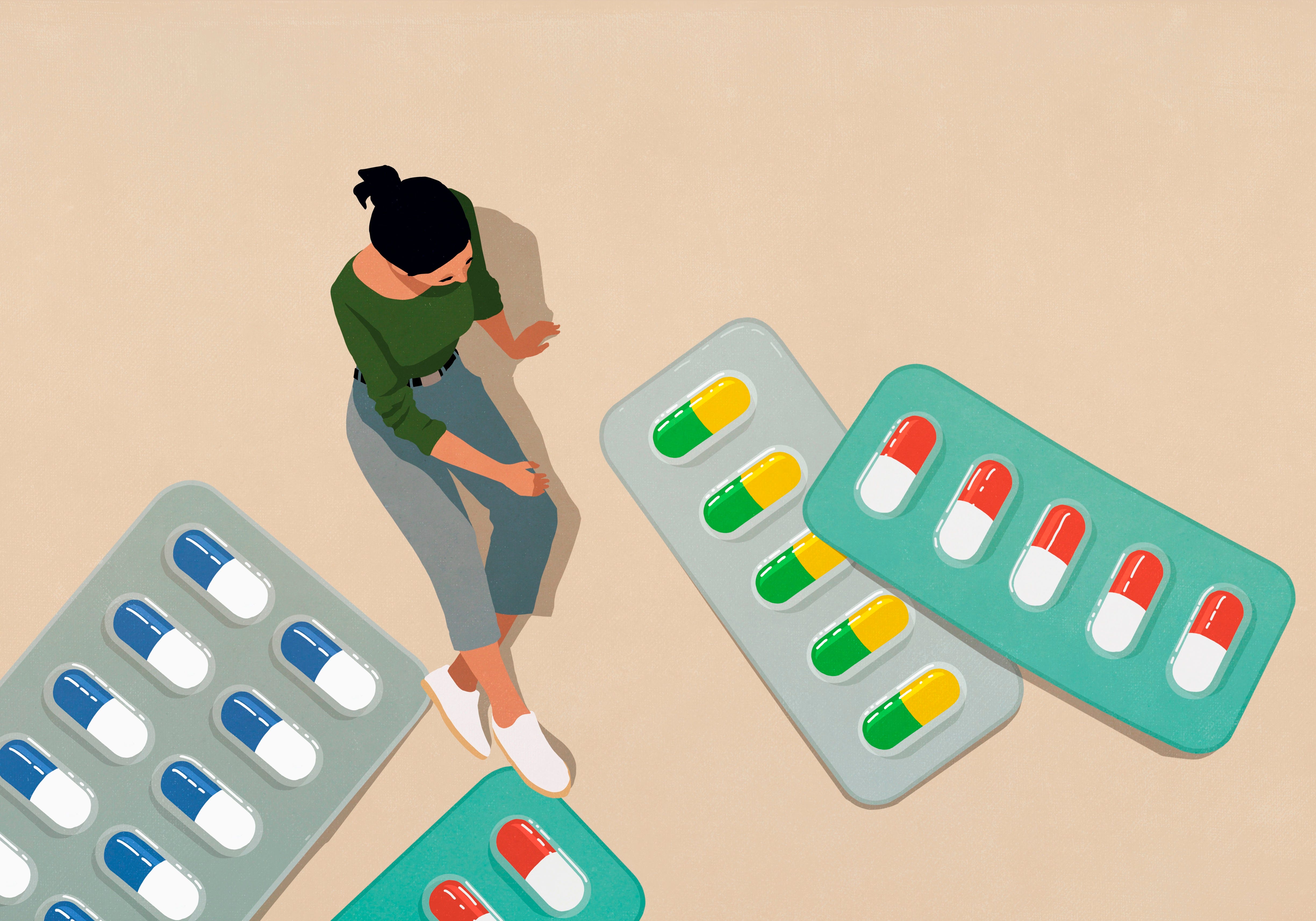
I am about to dig into that, but first, a quick(ish) rundown of the complex way we got here:
Hormone therapy is medication that replaces the estrogen your body no longer makes on its own as it ages. Systemic hormone therapy — like estradiol patches, pills, gels and sprays — help treat vasomotor symptoms like hot flashes and night sweats and can also help with mood, sleep and brain fog. Research now indicates it can also help with bone and heart health long-term too.
In 2002, the Women’s Health Initiative (WHI) study reported a heightened risk of breast cancer among hormone therapy users. In response, the Food and Drug Administration (FDA) issued a black box warning on the estrogen products used for hormone therapy, the strongest safety warning.
Some providers disagreed that the risks of hormone therapy were that high for most people in perimenopause and early menopause who were suffering from disruptive symptoms. (They often point to the fact that the average age of WHI participants was 63, past the average age of menopause and thus already at a higher risk of developing breast cancer.)
More recent research has shown that the risk of developing breast cancer doesn’t seem to be higher across the board, though it is for those who start hormone therapy after the age of 60 or are on hormone therapy for more than 10 years.
In November, the FDA reversed the black box warning. This doesn’t mean the medication has no risk, just that it didn’t warrant the highest level of caution in prescribing.
Many providers are still very cautious about prescribing hormone therapy to someone with a history of breast cancer because of the way that some hormones can feed some forms of cancers in some patients — and also because of continued stigma from the WHI study.
So what should people with a history of breast cancer and perimenopause symptoms know about hormone therapy and risk?
If you run anxious like me and just want to know the topline takeaway — and don’t worry, I’ll still spin out the longer answer below — I’ve got you: Hormone therapy can increase the risk of breast cancer, and it can increase the risk of recurrence in certain breast cancers. For some people, this risk is higher. For some people, this risk is lower. Hormone therapy is not for everyone. But it could still be a good option for many — including some breast cancer survivors, who should feel empowered to talk to their doctors about their risks and options.
Cue the expert
I wanted to talk to Dr. Sarah Glynne, a London-based menopause specialist and general practitioner and the lead author on a new review of the evidence on hormone therapy and breast cancer survivors.
Glynne and the other authors concluded that some survivors may choose to take menopausal hormone therapy (also known as hormone replacement therapy, or HRT) and accept some increased risk of relapse in exchange for relief from menopause symptoms — and that real conversations between doctors and patients around these trade-offs need to happen more frequently.
“The gist of the paper is not that we are trying to encourage use of HRT after breast cancer, because there will be a degree of risk,” Glynne said. “But for some, that risk will be very small. For some, that risk will be more substantial. What we’re trying to get over is that every woman deserves to have a conversation about what the risks for her are likely to be based on her history and then, depending on how she views the risk, be supported to decide for herself what she wants to do with that information.”
Glynne told me that there’s not a lot of recent, high-quality data on how breast cancer survivors do on menopausal hormone therapy long-term.
She also notes that the WHI study found that women using estrogen-only therapy had lower risks of breast cancer after 20 years of follow-up and that for women on combined hormone therapy (both estrogen and progesterone), the absolute increase in risk is small: one extra case of breast cancer per 1,000 women each year. And there are potentially other benefits to hormone therapy.
Glynne said she would love to see more conversation between doctors and patients about risk-benefit analysis, empowering patients to make choices they feel comfortable with.
Oncologists are trained “to prevent and slow down cancer at all costs,” Glynne said. “For some women, that will be the most important thing, in which case they shouldn’t take HRT after breast cancer. But there’s more to it than that: brain health, bone health, heart health, quality of life.”
Relative risk vs. absolute risk
Glynne mentioned a patient she saw recently who decided to not take hormone therapy after the two had a lengthy in-office conversation about its potential risks and benefits given her medical history.
“She said she felt so much better because it was her decision — she understood now what the risks and benefits were and it was her choice. It wasn’t being told, without anyone thinking, ‘Well no.’’”
Essential to this conversation, Glynne said, is more education about relative risk and absolute risk.
Relative risk compares two groups — so, for example, those who have had breast cancer vs. those who have not. Absolute risk is the probability something will happen in general. So if absolute risk is minuscule, for example, doubling it still gives you a small number.
As to why understanding these terms matters — and why she thinks more patients should feel empowered to ask their providers about them — Glynne said that often headlines just point to relative risk.
To use an example from the Breast Cancer Research Foundation, heavy drinkers have been found to have a 61 percent higher risk of breast cancer than non-drinkers. This doesn’t mean that 61 percent of women who have more than three drinks a day will get breast cancer, it just means their risk is higher.
The absolute risk of a 35-year old woman developing breast cancer in America before the age of 90 is 12.9 percent. So for those heavy drinkers? Their absolute risk is now 19 percent — higher than 12 percent, but a number that also sounds really different than 61 percent.
This framework could also benefit those with higher background risks, like patients with the BRCA gene or other family history. They deserve to understand how likely it is that they get cancer and how much more likely hormone therapy might make that, too.
It’s why Glynne is working with Jayant Vaidya, professor of breast surgery and oncology at University College London, setting up a clinical trial to study outcomes in women who choose to take menopausal hormone therapy after breast cancer. More data means more informed choices.
What’s next
Glynne said too many people have confessed to her that they have lied to their oncologists about using hormone therapy, for fear of their reaction. She’s also met patients who say they’ve had oncologists refuse to see them after they report using hormone therapy after breast cancer. Both of these outcomes concern her.
“Women aren’t taking HRT just for their skin and their hair. They’re taking it because they’ve got severe symptoms and they can’t function without them.”
That’s why Glynne hopes her work can at least be the start of a new conversation.
“As far as I’m concerned, every treatment option that is available to a woman who has not had breast cancer is also open to women who have had breast cancer. Every woman, I think, deserves to have a conversation about what it means for them in terms of their level of risk versus benefits,” she said. “And if you decide not to take HRT, there are actually still lots of options. … If your doctor is making you feel shut down, you need to find another doctor who will listen to you and talk you through those options.”