

Samantha Bee on menopause, shame — and wisdom
And why you don’t have to like skiing.


Samantha Bee and I agree: We’re both middle-aged.
I’m in my 40s, she’s in her 50s and we know — and maybe even embrace — that there’s no way around it.
“I do claim it,” Bee told me of the term “middle-aged.”
“I think I hated it at first, but I don’t have time to think of a new naming convention. I don’t have a better phrase that doesn’t sound like some fun euphemism, like ‘better-than-ever-age.’ There’s no version of that that doesn’t make me want to say, ‘Oh God.’ I’m middle-aged and everybody knows it.”
Bee of course is not only middle-aged. She’s also nothing short of a comedy legend.
She became a household name while appearing as a correspondent on “The Daily Show” from 2003 to 2015 — the only woman correspondent for the first five years of her time there. In 2016, she debuted her own late-night satirical news show for TBS, “Full Frontal with Samantha Bee,” becoming the first woman to host such a show.
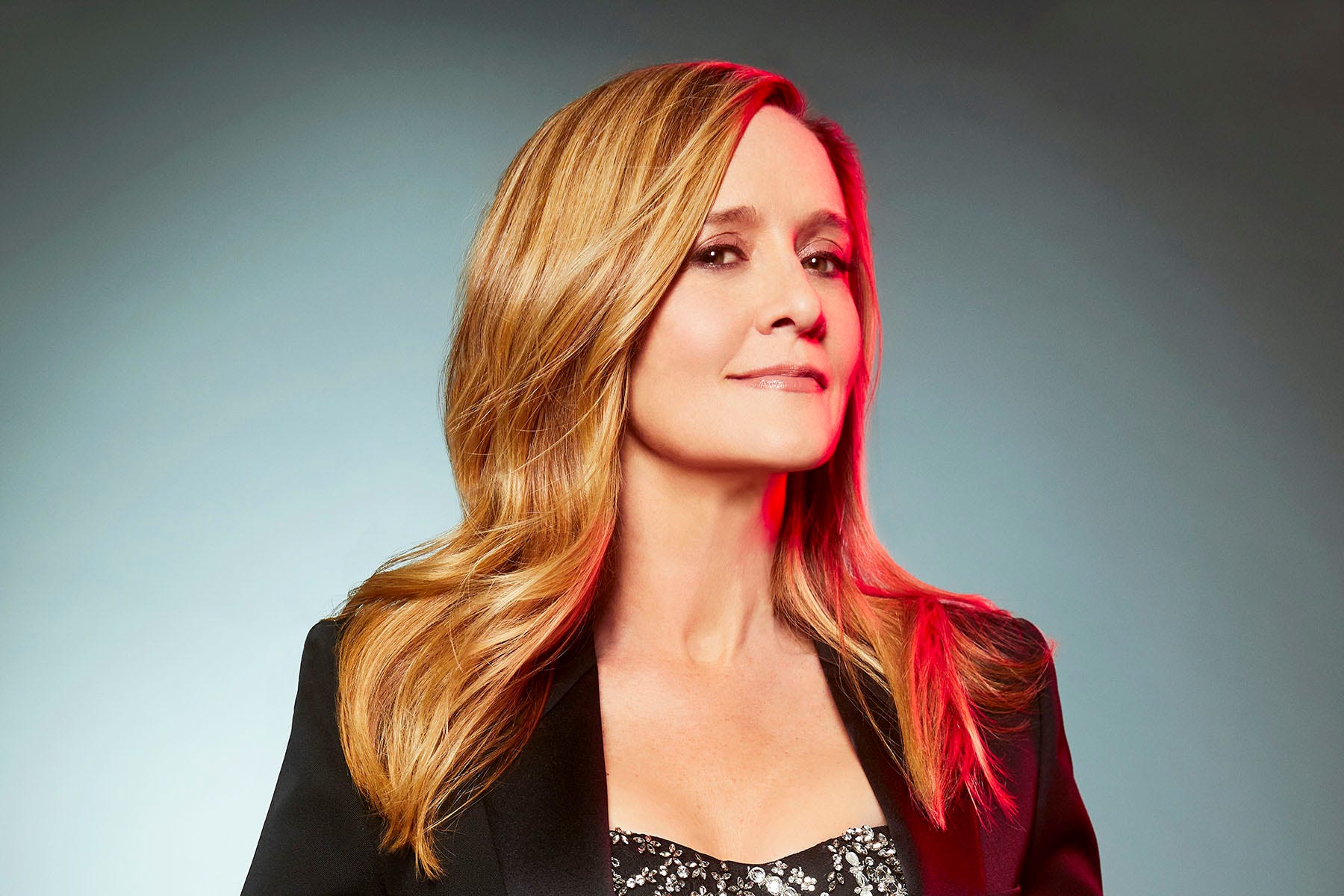
In 2024, she premiered her one-woman stage show “How to Survive Menopause”; the performance has been evolving, and touring, ever since. (Her website states that “she hopes the run will last as long as perimenopause — two to 14 years.”)
I spoke with Bee one afternoon last month about what it means to talk about menopause — how she came to it, how she has seen it evolve and what she still thinks is missing from the conversation.
No, it’s not just stress
Bee’s experiences with perimenopause became a huge part of her last major project, but not in a planned way; Bee started experiencing perimenopause symptoms just as “Full Frontal” launched. At first she attributed everything to stress.
“I stopped sleeping,” Bee said. “Actually, really stopped sleeping. It took me a really long time to go to the doctor and say, ‘It’s nuts — I never sleep. I wake up at the same time every night. I actually think I’m going crazy. I think I’m starting to see E.T. run behind the sofa. I’m starting to hallucinate shadow people in my apartment.’”
That’s when her doctor told her that she hadn’t lost her mind — she was just in perimenopause.
“Yeah, it was stress — but it was also my age so these things were happening in my body that were not within my ability to control or manipulate by just going to get a massage,” Bee said. “That was incredibly eye-opening for me, to be like, ‘Wait I have a medical condition.’”
Having language for it didn’t make it easier to talk about though, especially when it came to the big emotional swings she was feeling.
“I spent a really long time hiding it from everyone, what a topsy-turvy emotional state I was in. Like people would be in my office and everything was fine. I wasn’t out of control at work at all. But then everybody would leave my office and I would lock the door and just sob,” she said.
When she realized the reluctance to talk about it extended even to her husband, actor and comedian Jason Jones, she knew it was time to try to change that.
Nothing left unsaid
Her first effort at saying this all in a public way was an episode of “Full Frontal” devoted to the topic of menopause.
“It was really hard for me to do. It was really hard for me to sit in a room talking about this,” Bee said. “Everyone who worked with me at the show was younger than me. I was the oldest person on staff. It was really embarrassing to talk about. It was really embarrassing to joke about. I went with it, it seemed fine, but inside — I’m really shy about this. I’m vulnerable.”
It was an experience that left her with some sense of unfinished work, too.
“In a creative world where I really left no stone unturned, when the show ended, I thought — what should I be talking about? What’s left that’s been unsaid by me? Well, not too many things, really — except for this.”
A one-woman show about menopause was born.
Bee said that over the past decade, she has seen the conversation about menopause evolve to become one that validates people’s experiences and lets them know this wasn’t all in their heads, but something biological, real and normal.
But today, she said she feels a changing tide again.
“Now I feel like the pendulum has completely swung back and we’re in a state of almost denial. We’re actually reigniting shame on such a deeper level. Now it’s all about products and techniques and everyone is a kind of purveyor of products,” Bee said. “It’s all a grift, right? Just this gold rush of ‘menopause products.’ Why are we standing on vibration plates?”
Back to high school
Right now, Bee said she can’t shake the feeling that the conversation about menopause and women’s experiences with middle-age has become “regressive.” It also feels familiar.
“It feels like we’re pushing a deeper shame that reminds me of when we were all teenagers with this intense body shame.” Bee said. “I get that people want to stay youthful. You do want your skin to look dewy! It’s very, very hard. I want my skin to look dewy and my hair to stay put the way it is too. I don’t want dark roots.”
In her one-woman show, Bee said she tries to tackle this all with honesty and humility. She’s just as subject to the confusion that can emerge from social media. And yes, she said, “I also want to be fit and healthy and I do lots of stuff to keep me fit and healthy and fit into my pants. I absolutely do.”
But what she also tries to do with the show is move women away from the shame of it all.
“I strongly, always advocate in my life and in the content I create for untethering yourself from shame. That is just a core message that I try to drive home. I’m not going back to how I felt in those teenage years.”
You don’t have to like skiing
Bee also likes to point to the perks of aging.
“I do feel stronger. I do feel I have immense life satisfaction. I feel smarter, I feel wiser,” Bee said of her own midlife experience. “I don’t feel like I’m that wise, but I feel wiser than I used to be, for sure.”
That wisdom takes different forms. Sometimes, she said, it’s having the self-awareness to say no to people who keep insisting she would like skiing if only she tried. Sometimes it’s telling a friend she loves them, but wouldn’t love to go to their party. Sometimes, it’s finding new ways to challenge herself and learn new things, like yoga and dance.
“Not to be cliche about it, but there actually is like a new life on the other side. I really don’t love the approach of, ‘I’ve never been better!’ I mean, I’m in my 50s. I don’t know if that’s true,” she said.
“I was better — I was fitter, I was more flexible, I didn’t have aches and pains, I could stay up all night and I was fine the next day. But I was also probably an asshole? I was probably not that cool as a person. So, I don’t wish to be young again. I do wish for society to leave us alone a little bit and respect our time and wisdom.”
I’ve so enjoyed Samantha Bee, and I especially appreciated her pointing out the resurgence of body shame and the contradictions upheld by industries that profit from telling women there is always something to fix. I’m no comedian, but I recently participated in a slam on the theme “My Body, My Rules,” and Samantha is welcome to borrow this :)
We’re taught that menstruation
is something to endure —
a curse.
And then we’re told
that its ending
is somehow even worse.
Come on.