

What one state is doing about menopause care
In Illinois, Lt. Gov. Juliana Stratton kept hearing about the impacts of poor access to menopause care.


Like many other political leaders in the United States, Illinois Lt. Gov. Juliana Stratton was thinking about affordability.
That’s why she started hosting a series of conversations with women in her state about financial wellness and economic challenges. She expected to hear about housing costs, low wages, the challenges of saving for retirement. But she was surprised by what she actually heard a lot about: menopause — and how much it was costing.
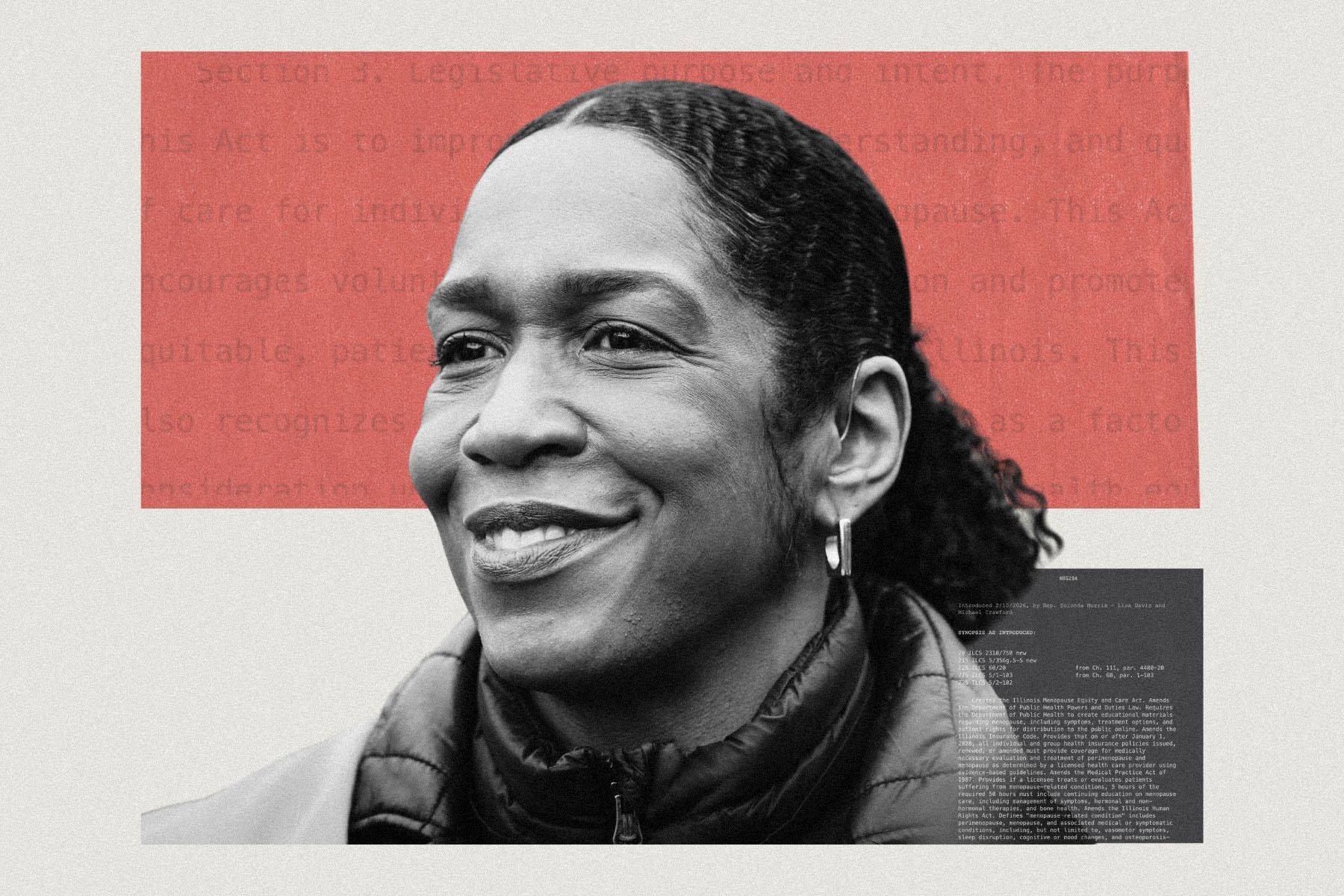
Stratton and her team quickly realized that menopause was creating such a financial burden for so many people because they couldn’t get the care they needed. There was work and productivity lost to untreated symptoms. There was bouncing around from doctor to doctor, taking time off of work each time, trying to get answers. There was the money spent on alternative treatments found online, in the absence of actual medical care.
That’s when Stratton also learned that 70 percent of women who seek medical care related to menopause symptoms do not receive treatment. Menopause symptoms that affect worker productivity result in over $150 billion lost globally. Black and Latina women disproportionately experience more severe symptoms — and are also less likely to receive hormone therapy from a healthcare provider.
The stories Stratton kept hearing about the financial and physical impacts of poor access to menopause care made something immediately obvious to her: “There’s a real policy solution for this.”
At the end of May, the Illinois state legislature unanimously passed a law amending the state civil code so that beginning January 1, any licensed healthcare professional in the state can take specialized training in perimenopause and menopause care for their required implicit bias awareness training.
The bill doesn’t create a new continuing medical education (CME) hours requirement but rather finds a creative way to put the option of menopause training in front of all licensed providers in the state. Illinois is the first state to create this type of incentive for menopause education among healthcare professionals.
That’s why I wanted to connect with Stratton to hear more about the Illinois bill, how perimenopause and menopause should be part of the larger conversation around affordability, and what she sees as the legislative road ahead — especially as she is likely to win the race for an open U.S. Senate seat in November.
Mind the gap
Stratton tells me that this legislation was prompted after her team discovered that fewer than 200 physicians in Illinois were certified as menopause health professionals.
“When I think about a state of almost 13 million people and half of the state being women — 200 people being certified just wasn’t enough,” she said.

But she said she knew that any solution needed to not only address that women weren’t getting the care they needed, but also ensure that it didn’t add an impossible burden to physicians.
“Having all physicians being able to get this, you never know who you’ll have that conversation with. It could be your primary care physician, but it could be another physician that you’re seeing and you’re talking about your symptoms and what you’re feeling — the brain fog, the hot flashes, not being able to sleep — and it could lead more physicians to say, ‘Hey have you checked out to see whether this might be that you’re experiencing perimenopause or menopause?’”
Knowledge is power
Pauline Maki, PhD, is director of the Center on Health, Awareness and Research on Menopause at the University of Illinois College of Medicine (UICOM) and a leading menopause researcher who worked closely with Stratton’s team on Illinois’ menopause bills.
“We’ve been trying for decades to underscore the importance of having providers trained in this universal experience for women who live to late life,” Maki said. “Every organ system in the body has estrogen receptors and although 27 percent of women sail through menopause without a problem, I think it’s really important that we recognize that for a lot of women, it represents a very challenging time.”
It’s a challenge that not all healthcare providers are equipped to address, which can mean patients turning to therapies without any scientific basis that can sometimes be harmful. That’s why the Illinois bill is so important, she said — and is gaining attention.
“My inbox is blowing up with people asking me to consult with them on their legislation.”
Maki is helping design an Illinois CME menopause education course and said it will focus on things like the basics of prescribing hormone therapy, the basics of prescribing non-hormonal FDA-approved therapies, and how to address the needs of various patients.
Not the last
Illinois is not the first state to address menopause legislatively. As of 2026, 10 states and Washington, D.C., have enacted a menopause law of some kind; 60 pieces of legislation related to menopause have been introduced in state legislatures this year alone.
These new bills tend to fall into three categories: workplace accommodations, insurance coverage and healthcare provider education.
Rhode Island was the first state in the nation to pass a menopause law; a bill signed into law in June 2025 mandated workplace accommodations for menopause symptoms and banned discrimination against employees seeking these accommodations.
Red, blue and purple states alike — including Illinois, Louisiana, Maryland, New Jersey and Virginia — have enacted insurance coverage laws for menopause care.
Maine requires its state Department of Health and Human Services to provide informational materials on menopause to clinicians.
But the approach of the Illinois bill is novel: Outside entities, like UIC Health, can now create CME courses on menopause that can be distributed for healthcare professionals to take to fulfill their implicit bias training requirement.
When the political is personal
Stratton, 60, understands the toll that perimenopause can take because she lived it.
“I have a fantastic doctor, but I do not remember a proactive conversation that said, ‘Juliana, we need to talk about perimenopause and menopause, what the symptoms are, what your treatment options are, what’s possible.’”
She said that now she thinks back to the years of feeling exhausted after not being able to get a full night’s sleep, her primary symptom. “The impact that it had — to get up and have to push through for work, feeling just sluggish all day, because I wasn’t sleeping, and there was not really a solution that was tried. When I would talk to my doctor, it didn’t come up.”
She said she thinks a lot about the 94 percent of women who report being inadequately informed about menopause and the health issues surrounding it.
“I’m a mom of four and working, and to have a position that requires my full attention and focus — it’s hard to do when you’re not sleeping or when you feel like no one cares that you literally are having symptoms of menopause but it’s never been identified as that,” Stratton said. “It’s not treated as a public health issue, it’s treated as a personal issue. We need to change that.”
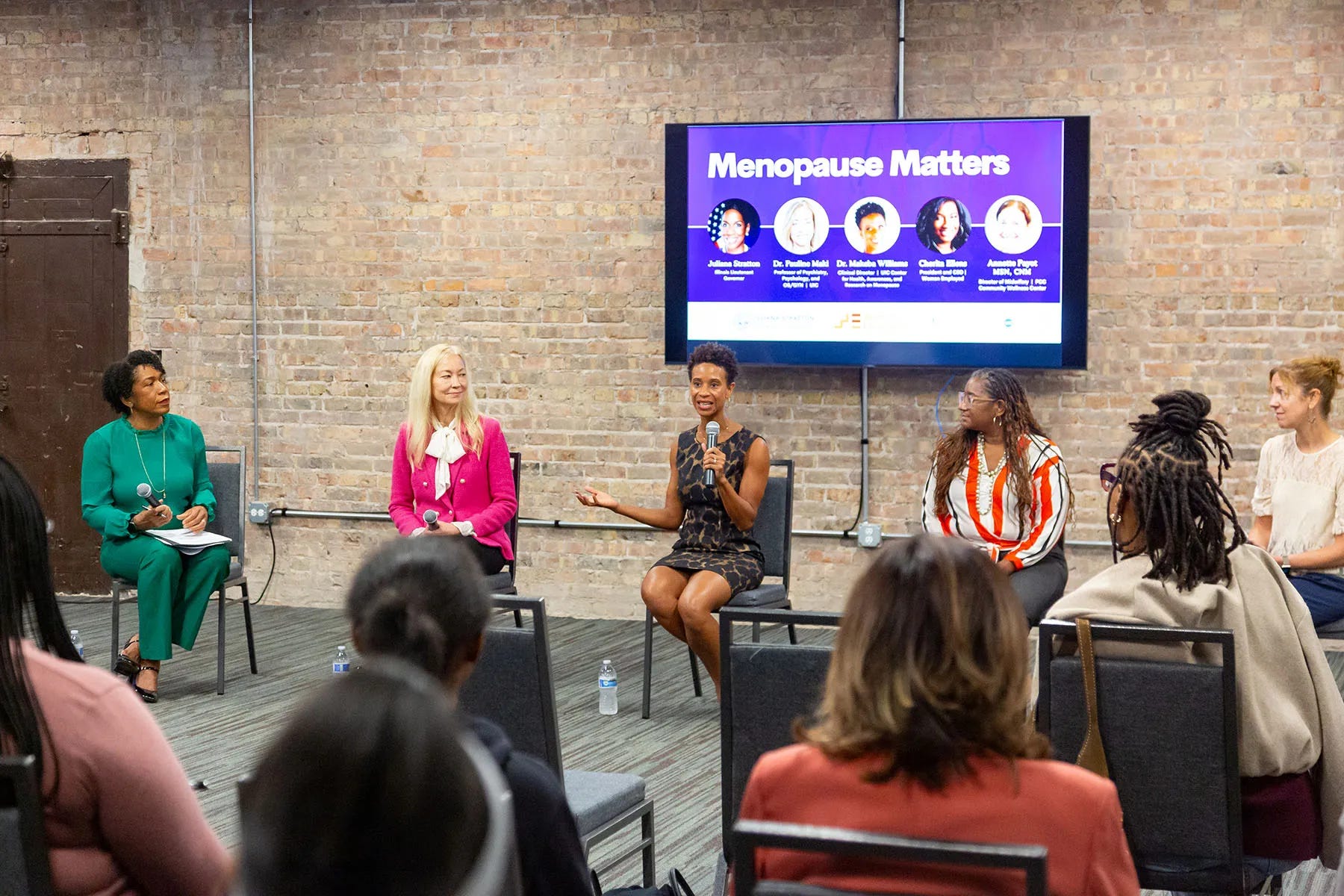
What’s next
Stratton said this bill isn’t the end of this work.
She wants more investment in women’s health, on the state and federal levels, and a focus on what it costs both people impacted by perimenopause and menopause symptoms as well as what it costs society when their work is impacted.
“Women are spending so much just to be able to get the relief and the care that they need and they deserve,” Stratton said. Accessible healthcare, she said, can save patients real time and real money.
Echoed Maki, “I can’t think of another condition that affects more citizens in the state than menopause. … I think the return on investment for this training for the state and the health of its citizens is huge.” It’s why Maki said she thinks Michigan will soon follow with a similar bill; she also pointed to work in California and said there’s related momentum in Massachusetts.
Stratton said she also is thinking about the fact that the equity gaps in menopause care disproportionately impact women of color — women who often are already less likely to be having conversations about menopause at home and also disproportionately experiencing more severe symptoms and for longer periods of time.
In the Senate, Stratton hopes to be a leading voice on this issue — and to champion the fact that investment and attention must be paid to women’s health beyond their childbearing years.
“Older women fall woefully behind when it comes to the attention and the research,” she said. “We need national, federal policy that elevates an issue that will affect every single woman in this country. Every single woman will go into menopause. So why are we not talking about it?”