

Making sense of peptide mania
It's Week 3 of Deinfluencing Month!


Welcome to Week 3 of Deinfluencing Month, where we continue to ask all of my favorite questions like, “Wait am I supposed to be doing this?” and “Why are people so weird about women’s health choices?”
(So far, we’ve covered vibration plates and cold plunges in case you have FOMO.)
If you walk down any given aisle at Sephora, you see the word. If you listen to any podcast having to do with wellness or longevity, you’ve heard about them, too. And you may have caught wind that Secretary of Health and Human Services Robert F. Kennedy Jr. is moving to lift restrictions on certain injectable forms of them.
But still — still! — you may be wondering what the hell *are* peptides
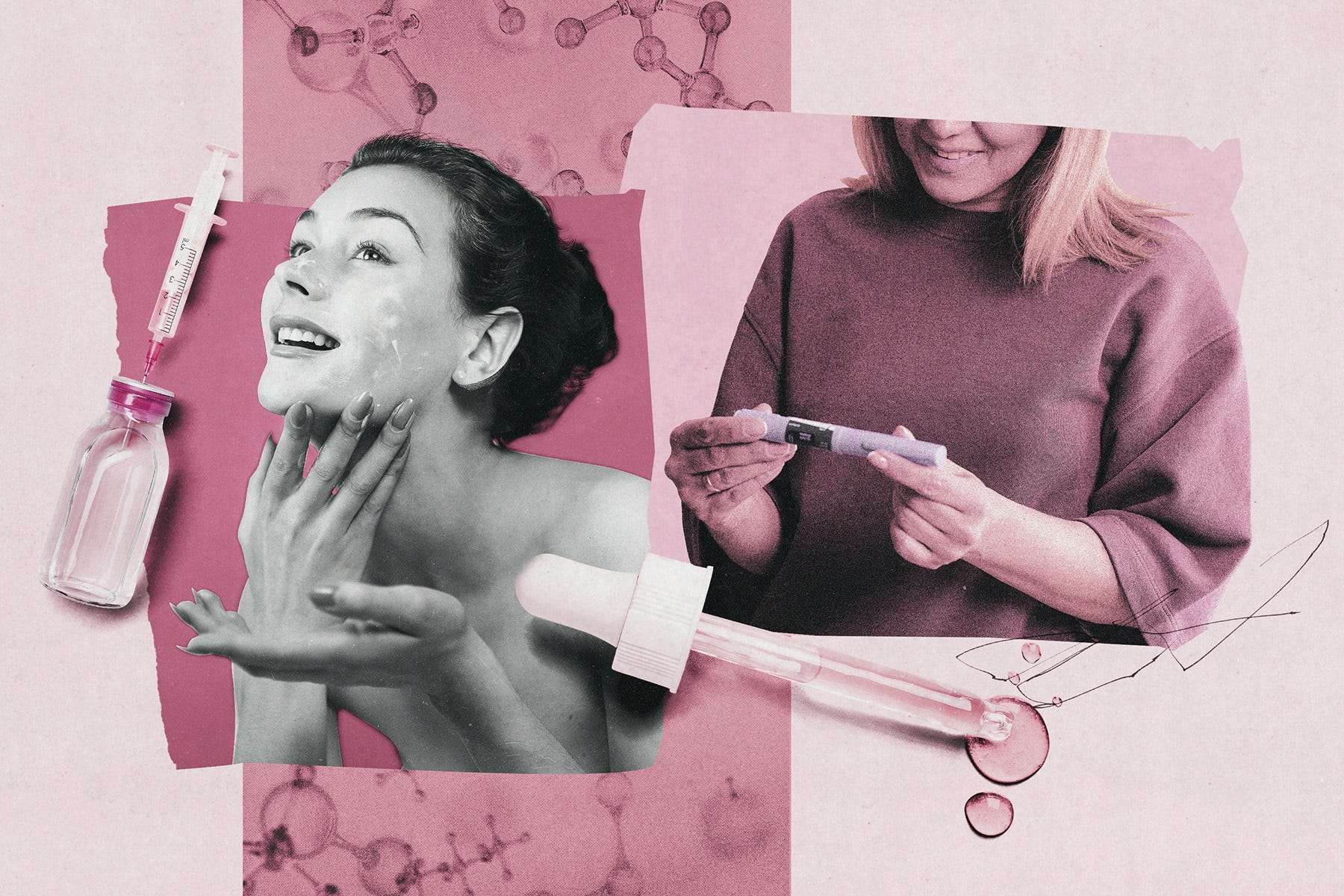
I was, too. That’s why I called Jackie Giannelli, a board-certified nurse practitioner and clinical strategist at the Carolyn Rowan Center for Women’s Health and Wellness at Mount Sinai Hospital in New York City.
Every day, she told me, she encounters people in perimenopause and beyond asking her about peptides of all stripes. And for many of these patients, she prescribes peptides, too — with some caveats.
A biology lesson
Peptides, Giannelli explained, are signaling molecules that amplify the work your body already does. More specifically, they’re short chains of amino acids that create signals for different parts of the body, helping specific molecules do what they do — but more intensely.
Peptides don’t all do the same things — or even exist in the same formats.
Insulin? A peptide! (Tells cells to absorb more glucose from the bloodstream and helps convert glucose into energy that can be used by muscles.)
A GLP-1 like Ozempic and Wegovy? Also a peptide! (Tells the body to make even more of the GLP-1 hormones it makes naturally to stimulate insulin secretion and signal fullness to the brain.)
And GHK-cu copper peptides? Well, you might have heard about how they can boost collagen production, in turn reducing the appearance of fine lines and wrinkles and make you look like a forever-35 glowing angel.
Giannelli explained that while there are in fact a lot of things peptides can do, they’re not a panacea.
Buyer beware
You can get peptides from all sorts of sources — but that doesn’t mean you should. Some are topical, some come in pill form, and some are injectable.
Giannelli said that if you think a peptide could be right for you, the first thing to do is ensure you’re working with a reputable, educated, vetted medical provider who can review your medical history, determine what makes sense for you — and then write a prescription for you that will be filled by a regulated pharmacy.
“It’s super important that nobody gets these peptides from a website that says ‘add to cart,’ where you can get these delivered to your door without a prescription,” she said.
It’s possible to get peptides without a prescription — but these, referred to as research-use-only peptides, have not gone through a rigorous safety testing process.
Any that come from a non-licensed compounding pharmacy should be avoided.
“Even my own patient base, I have to really deter some people from using specific websites they brought to me. It’s not easy to tell — the marketing is very good, right? And so it’s not easy to tell if that cute little influencer who’s selling her peptides online is getting it from a reputable source,” Giannelli said.
So to simplify: Interested in using peptides? Make sure you’re working with a licensed clinician who has expertise in peptides, are getting a prescription for them and are getting your peptides from a licensed pharmacy.
The skin we’re in (and putting things on)
GHK-cu — one of the peptides that comes up most frequently for women in midlife — is also one of the more researched and understood peptides among the newer wave of “anti-aging” peptides.
“We actually have some reasonable clinical data around the safety and efficacy of using topical GHK-cu for things like collagen building, wound healing, etc,” Giannelli said. That’s why you may have heard about just how amazing it can make your skin look.
Some products with copper peptides are available at stores, while some topical products can be procured only via prescription from a licensed provider. Those are a lot more potent, Giannelli said.
She uses retinol as a point of comparison.
“You can get kind of watered-down retinoids at Sephora, but they’re not going to be as strong and cause the same cell turnover that you’re going to get with prescription retinol, right?” Giannelli said.
Looking for more dramatic results? You’re going to want a prescription-grade product.
But while GHK-cu could help your skin, Giannelli cautions that it can’t replace the basics. Those basics are as simple as you think they are — proper sleep, diet and exercise.
“Just putting skincare on and then not taking care of your body in all the other ways? Your results aren’t going to be there.”
Topical to injectable pipeline
But here’s where things get complicated.
Many patients have heard about the efficacy of topical peptides for skincare. And now they’re hearing more about injectable peptides generally. So they start assuming that if something is good topically, it’s even better when injected. But we don’t always have the testing that could back that up (or disprove it).
“We don’t have any good, long-term, randomized control, gold standard data to prove that this is safe,” Giannelli said of injectable GHK-cu.
While GHK-cu has become well-known for its topical effect on skin quality, when injected, it does a lot more than that, actually changing gene expression. Some of the early data on this looks promising, but again, none of this has been replicated in reputable human trials. So today, with the available data, it’s something she wouldn’t recommend.
“Everyone’s got a stack”
Giannelli also said the current social media landscape can make it seem like “everyone’s got a stack” of multiple injectable peptides they take as part of “fancy bio-hacking, precision, longevity protocols.”
Giannelli called this approach “silly.”
Which isn’t to say there isn’t a place for some peptides for some people. Giannelli said some specific peptides pair very well with hormone therapy for those in perimenopause, boosting the efficacy of hormone therapy’s ability to ease symptoms — but that she personally always counsels patients to nail down the hormones before introducing peptides.
She points to the efficacy of GLP-1s like Ozempic as an example, a peptide with FDA approval that has been found in early research to be even more effective when used in conjunction with estradiol-based hormone replacement therapy.
But that doesn’t mean we should all be injecting lots of peptides forever, without talking to medical providers who are able to monitor our labs and stay up on all the latest high-quality data.
“There are very unique and specific ways of using them that can be beneficial — but almost never long term,” Giannelli said, “Most peptides are meant to be cycled on and off and you’re using them for a specific reason and then you’re giving your body a little bit of a break to heal or recover or regenerate.”
They can also increase blood flow or change the way cells grow and divide, which could be a risk factor for those with a history of high risk for cancer.
“In a healthy person, that can have incredibly beneficial outcomes, but in somebody who has pre-cancerous cells growing that may sort of promote the growth of cancer instead.”
What’s next
Giannelli said she doesn’t believe that peptides are all bad — it’s why she herself prescribes some peptides for some use cases to some patients.
“I feel really passionately about having these fair and honest conversations about everything in women’s health, and peptides are just sort of at the pinnacle of the conversation,” she said.
She also understands why she sees so many women in midlife suddenly asking for them as they look for answers about their health and hormones.
“They’re really coming to me and begging for some of this stuff, not only because it’s marketed to them so heavily at a vulnerable period of their life — midlife, perimenopause, where they’re not feeling like themselves anyway — and they feel a little gaslit or misled or depressed and they’re just willing to try anything to not feel bad. And I get that. I understand why someone would ask for these things.”
The conversation around peptides right now actually reminds her a lot about the conversation around hormone therapy a decade ago, with some calling it a magic cure-all and others pointing out things to be scared of.
“It may not go viral on social media when we have more nuanced conversations, but personally I think that’s what we need. We dumb things down for women because we think that they can’t understand or we want to market it to them and use simplistic language. And I feel like we can do better than that.”