

Funding a menopause revolution
Putting dollars into education, not fear


It wasn’t even 7 a.m. on June 4 and my phone was already inundated with messages. Colleagues, friends and even my mom wanted to make sure I had seen the news that Melinda French Gates had penned an op-ed in The New York Times about the need for “a menopause revolution” and real investment in the medical research and professional development needed to ensure that more people get the care they need.
And French Gates was putting her money where her mouth was: Alongside the op-ed, a press release from her philanthropic organization, Pivotal, announced the details: The organization would be giving $215 million to fund research and resources connected to women’s reproductive and midlife health. The new funding announcement brings French Gates’s total philanthropic funding to women’s health to more than $600 million in the last two years.
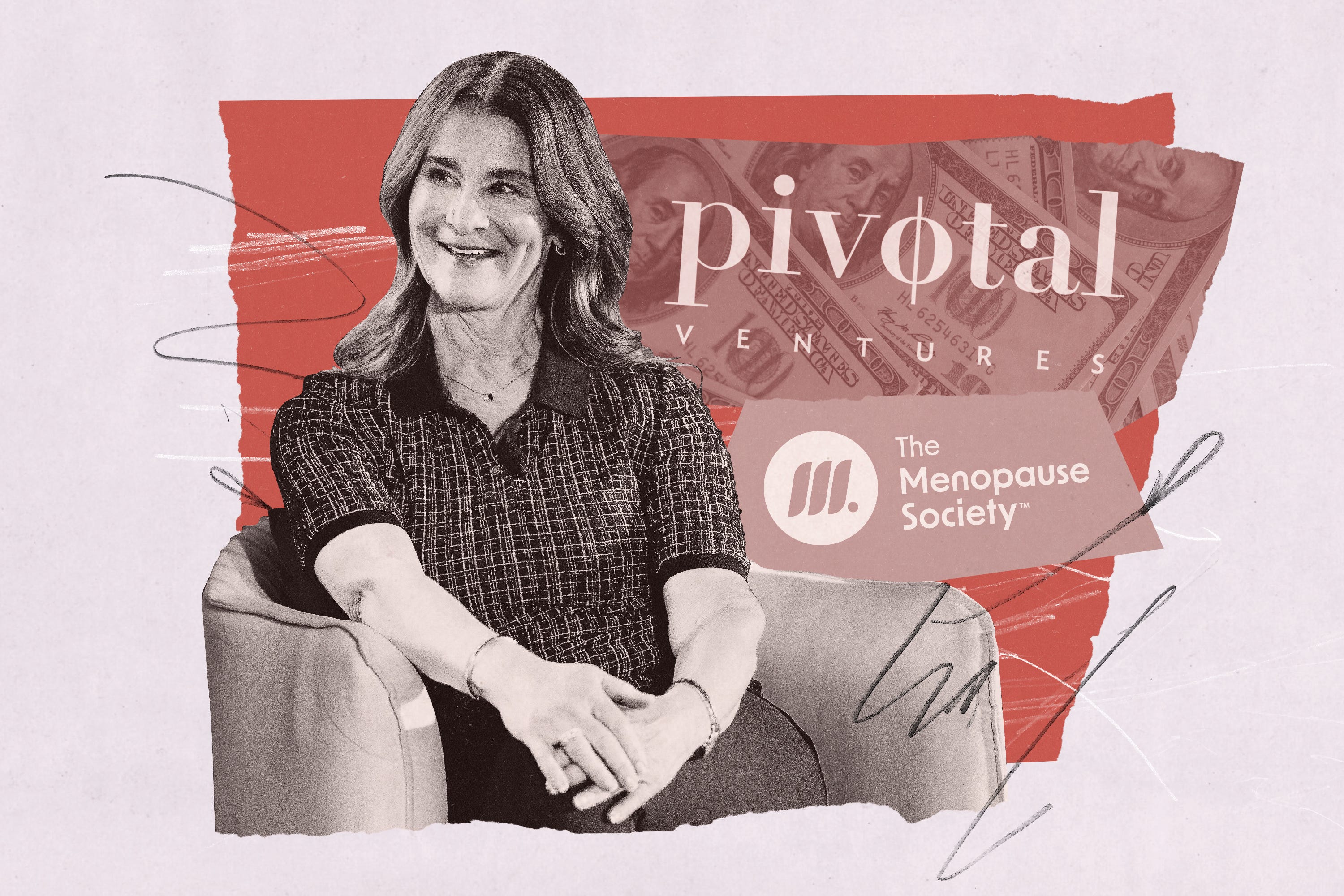
(French Gates and Pivotal are also supporters of The 19th.)
I’ve been writing this newsletter for almost a year now, and the lack of funding for menopause research and education comes up just as much as hot flashes and brain fog. It’s clear: We can’t only think about symptoms — we also need to think about systems.
That’s why I wanted to connect with the folks at Pivotal and their funding recipients to talk about what this announcement really means.
Equity and impact
When I spoke with Renee Wittemyer, the vice president for program strategy at Pivotal, she said the guiding philosophy behind their work is simple: “Women can’t do well if they can’t be well.”
She mentioned the gender health gap — that women experience higher levels of illness than men, spending an average of nine years in poor health. Part of the problem? The lack of funding in the women’s health space.
Wittemyer told me that at Pivotal, decision-making is driven by an assessment of the funding landscape around a given issue — and getting a sense of where they could really make a difference.
“With menopause and midlife, we were like, ‘Oh — and there is no funding,’” she said.
YES.
A new vision for healthcare
Wittemyer said one of Pivotal’s goals is to see more menopause-specific training for healthcare providers, the integration of menopause education into a greater proportion of residency programs and expanding outreach in areas where access to menopause care is the most limited. It’s why one of the recipients in this new funding announcement is The Menopause Society, which received a $10 million grant.
With that money, The Menopause Society — a nonprofit that focuses on education for healthcare providers — wants to find new ways to normalize the conversation around menopause care and get more providers trained on it.
First, the group is developing a digital education resource platform for providers. Next, it will be looking into provider shortages in so-called “meno deserts” and creating plans to train providers in those areas — and train those providers to train others as well. The group also plans to look at systemic barriers within the health care system — things like issues with insurance billing codes, diagnoses being contingent on patient self-reporting — to tackle making treatment more accessible for more people.
Dr. Stephanie S. Faubion, the organization’s medical director, wants to make sure people aren’t thinking about menopause as a disease.
“It doesn’t have to be scare tactics, that we have women thinking that at 40 something horrible is going to happen to them.”
Faubion points to puberty as a reference point: Many of us are having normal conversations with our kids about their bodies changing and what it means to get a period. That same talk isn’t happening right now with menopause — and there’s room for growth on the provider side of that dialogue.
Faubion sees too much fear right now — especially online, especially on Instagram. It’s a fear that’s driving so many to treatments that range from unnecessary to untested to unsafe.
“If I were going into this without the knowledge, I would think I would have to spend thousands of dollars every year on supplements and that I would have to have x,y, or z treatment, which is simply not true,” she said. “I don’t think we need to be scaring half the population that something awful is happening.”
Thinking globally (literally)
Another grant recipient in this recent Pivotal funding announcement is Co-Impact — an organization that partners with local groups working in Africa, Asia and Latin America — on their work in women’s perinatal mental health. Co-Impact is receiving a $40 million grant from Pivotal to support locally led organizations embedding mental health services for women into maternal and primary care systems, with a focus on Africa.
It’s work that Yasmin Madan, the senior director of strategic partnerships at Co-Impact, said is not only critical for advancing equity, but is a natural complement to the work being funded domestically on menopause education.
The way Madan explains Co-Impact’s global work on women’s mental health echoes the work being done by The Menopause Society in their field: It’s about thinking intentionally about these huge moments of life change for women and the risk that comes with them.
“When there are hormonal changes, when there are identity changes, when there are societal risk factors like gender-based violence, poverty — that’s when this really peaks. And each of these inflection points then compounds further.”
Without the right support, healthspan — or the portion of a person’s life during which they are in good health — can be forever impacted. This is true during pregnancy; it’s also true during menopause.
The attention economy
Both personally and professionally, I’m constantly hearing stories from people about their experiences with perimenopause, menopause, and healthcare — or lack thereof.
I hear stories from people who say their doctor dismissed their symptoms. I hear stories from people who went to doctor after doctor, looking for someone, anyone, who would just listen to them. I hear stories from people who aren’t even sure they know when they should trust their own doctors anymore and are turning to alternative health practitioners who are ordering labs and peddling products their medical doctors have advised against.
That’s why it feels so significant that so many dollars from such a well-known source are now aimed at combating the noise, misinformation and grift that have coopted the menopause space.
“That we have somebody like Melinda Gates who thinks this is really important and has decided to put her weight behind this speaks volumes. I think even more she’s kind of thrown down the gauntlet as a call to action to others to do the same,” Faubion said.
It’s why Wittemyer told me that future stages of this funding work may also include supporting legislative work at the state level to make menopause care more accessible, too.
As Wittemyer said to me: “We want women to be supported across the arc of her life and the trajectory of her life through those moments when you can make or break your long-term health trajectory. If women can get the right care at the right time, it can just change everything.”